5 Min Read
A lot of first-floor bathroom projects start the same way.
You’re hosting friends, and someone asks where the bathroom is — and you point upstairs.
Or mornings feel a little chaotic because everyone is sharing one full bath.
Or you start thinking ahead about aging parents… or your own knees.
At some point, you start wondering whether you can make space for one on the first floor without turning your house upside down. The good news is that you can.
This guide will show you how. It will cover costs, timelines, and required permits so your bathroom addition can be a success (and you can stay sane).
Use these links to navigate to the sections you want to read:
How Much Does It Cost to Add a Bathroom?
The real answer depends heavily on placement and structure.
When you're adding a bathroom inside the existing house footprint, the scope of work and cost differ from a home addition. Also, with first-floor bathrooms, you typically will include a toilet, sink, and shower. If you're looking to build a half-bath or powder room instead, then you will need to go over layout specifics with your remodeler.
But typically, the cost of a bathroom addition in NJ for a first-floor project ranges from $40,000 to over $85,000.
It can be lower if plumbing is nearby and the layout is straightforward. It climbs quickly if structural work, slab cutting, or foundation changes are involved.
First-floor bathroom addition cost is largely driven by:
- Distance from existing plumbing lines
- Whether the home sits on a slab or a basement
- Structural framing changes
- Exterior wall modifications for windows or venting
- Finish selections
The biggest surprise for most homeowners? Infrastructure matters more than tile. For example, a new bathroom can’t share the plumbing with a kitchen and laundry. The pipes that drain waste from the bathroom are larger than those for a kitchen sink, so they won't be compatible. Make sure you're working with a reputable remodeling team that will keep these issues in mind as you draw up a budget.
For more budget planning resources, download our Cost Guide.
Do I Need a Permit to Add a Bathroom in NJ?
In short, yes.
Bathrooms touch multiple systems, which means permits are required in almost every case.
The typical bathroom addition permits in NJ include:
- Building permit
- Plumbing permit
- Electrical permit
Each township manages its own approvals, and the process varies slightly by town. However, the NJ building permit requirements for a bathroom addition generally involve submitting drawings, contractor information, and scheduling inspections at key stages.
The process to get a permit usually looks like this:
- Submit drawings and permit application forms to your local building department
- Wait for review and respond to comments if needed
- Receive approval
- Schedule rough-in and final inspections
It may feel like red tape, but permits protect you. Unpermitted work can create serious complications when selling or refinancing your home. Working with a qualified remodeling contractor can also ensure you get the proper permits.
Can I Add a Bathroom Anywhere in My House?
On paper, it may seem like you can carve out space from a dining room or expand into a mudroom. In practice, waste plumbing pipe slope, venting access, and structural framing all limit where a bathroom can realistically go.
Drain lines must slope properly. Vent stacks need access. Load-bearing walls can’t simply be removed.
If you’re exploring placement, here are practical first-floor bathroom layout tips:
- Place the bathroom near existing plumbing whenever possible
- Avoid interior locations far from exterior venting
- Consider how traffic flows through adjacent spaces
- Plan storage early so the room feels usable
Many families also think ahead. Subtle, accessible bathroom design ideas, such as curbless showers or wider doorways, can make the space flexible for long-term use and multigenerational living without compromising the aesthetic.
How Long Does It Take to Complete a Bathroom Addition?
Adding a bathroom isn’t a quick cosmetic update. It’s a construction project.
A realistic bathroom addition timeline typically looks like:
Planning and Design (3–6 weeks)
- Measurements
- Layout development
- Budget alignment
- Permit-ready drawings
Permitting (2–6 weeks)
- Township review
- Possible revisions
- Approval issuance
Construction (5–12+ weeks)
- Framing
- Plumbing and electrical rough-ins
- Inspections
- Drywall and finishes
- Final inspection
From first meeting to final sign-off, most projects take three to five months. Delays most often stem from permit reviews, material lead times, or mid-project scope changes.
Should I Work With a Design-Build Remodeler or a General Contractor to Install My Bathroom?
Whether you work with a general contractor or a design-build firm depends on the level of involvement you want with your project.
A general contractor builds from completed plans, which often means hiring separate design professionals and coordinating permits independently.
A design-builder integrates planning, drawings, permit coordination, and construction under one contract.
For a first-floor bathroom that involves structural or plumbing changes, alignment between design and construction can reduce miscommunication and costly revisions.
When deciding who to work with, ask:
- Who prepares and submits permit drawings?
- Who ensures compliance with NJ building permit requirements for a bathroom addition?
- Who adjusts the layout if unexpected framing or plumbing is discovered?
- Who tracks budget decisions during design?
How Does Adding a Bathroom Affect My Home’s Value?
In many older NJ homes, there’s one full bath upstairs and little else on the first floor. That layout can feel limiting.
Adding a bathroom can increase the value of your home. But the long-term value of adding a bathroom goes beyond resale percentages. It changes how the house functions daily.
A first-floor bathroom:
- Makes entertaining easier
- Supports aging-in-place
- Reduces morning congestion
- Expands buyer appeal
While resale impact varies by neighborhood, homes that solve functional challenges typically attract broader interest. Because for many homebuyers, it’s not just about the square footage of the home, it's about how livable the home actually is.
What Bathroom Design Trends Are Popular in NJ for 2026?
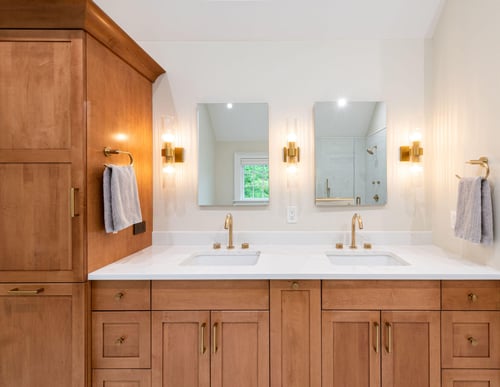
If you’re gathering bathroom design ideas, 2026 trends lean warm and practical.
NJ Homeowners are moving toward:
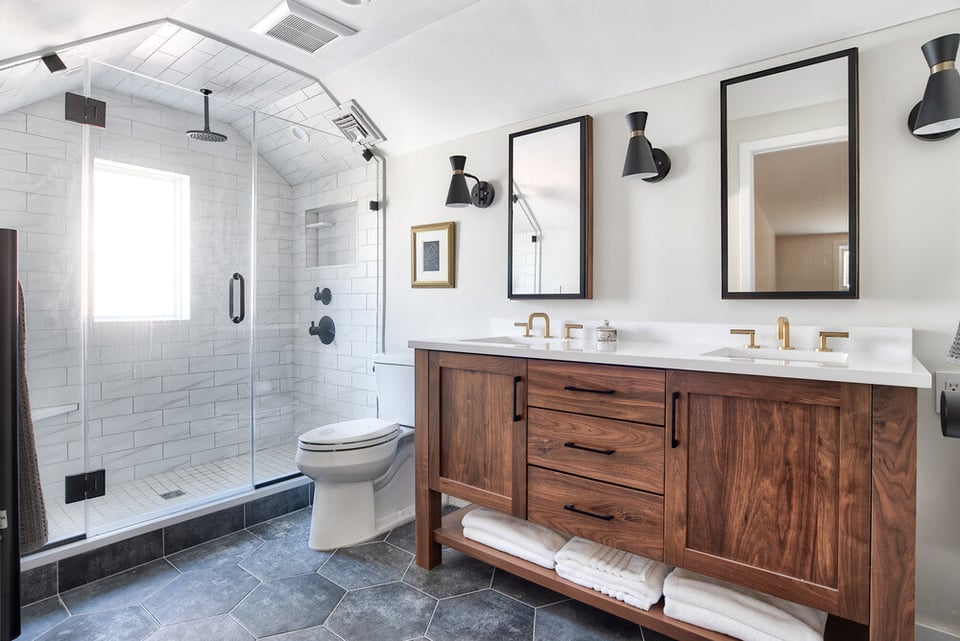
- Wood-toned vanities
- Soft, layered lighting
- Large-format tile
- Integrated storage
- Curbless showers
Many bathroom design ideas for new addition projects also focus on durability and comfort, like heated floors and improved ventilation. In New Jersey, especially in older homes, the goal is often for the addition to feel original and not obviously new. The best designs blend seamlessly with the existing architecture. For inspiration from one of our completed projects, explore our Lincoln Street bathroom remodel.
Fix The Problem Now, Not The Damage Later
While a first-floor bathroom won’t completely transform the look of your house from the outside, it will dramatically improve how your house feels to live in.
No more sending guests upstairs.
No more planning your day around one shared bathroom.
No more wondering how the house will work long-term.
An additional bathroom can make life a little less chaotic and make your home as it should be, a comfortable place you're happy to go back to.
G&L and Sons Renovations
Since 1984, G&L and Sons Renovations has helped homeowners throughout Northern New Jersey rework and improve the way their homes function through projects like home additions, bathroom remodels, and a range of other services.
Older NJ homes weren’t always designed for modern living. As a design-build contractor, we guide homeowners through the entire bathroom addition process, from early layout planning and permit coordination to plumbing, construction, and final walkthrough. Our team manages every detail so you’re not juggling architects, engineers, and contractors separately.
We treat every home as if it were our own, and we’re ready to help you make yours work better for the way you live today.
Check out our Gallery to see what we can build for you.
Ready to move forward?
Contact us and take the first step to building a better home.
.png?width=300&height=300&name=Foundation%20Cost%20Guide%20Tablet%20Mockup%20(10).png)
.jpg?width=352&name=Email%20Header%20Template%20(9).jpg)